
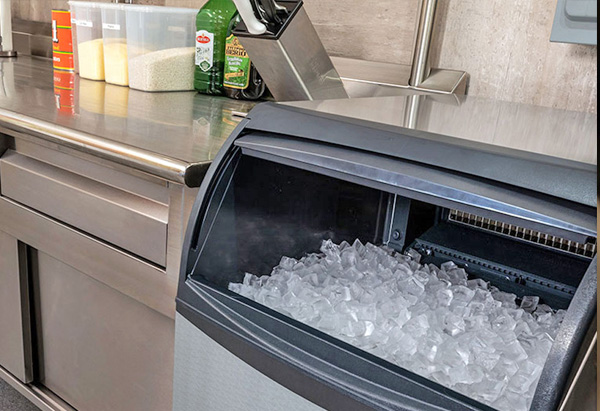
Direct answer: Size a commercial ice machine from the busiest realistic operating period, not an annual average. Measure pounds used, add melt and handling loss, account for warm air and water, then match production and bin capacity to the timing of demand. A reasonable growth margin is useful; arbitrary oversizing is not.
Use this answer with the commercial ice machine type guide to connect the application to the right ice form and equipment format.
Measure demand instead of guessing
Track bags, bin drawdown, servings and production uses through the busiest days. Convert cups or portions to pounds using the facility’s actual scoop and ice style. Separate regular demand from events and seasonal peaks.
Production and storage answer different questions
Production rate describes ice made over time under stated conditions. Storage determines how much is available for a concentrated rush. A machine can have adequate daily output and still run short if the bin is too small or if the production window does not align with service.
Adjust for the room and the consequence of failure
Hot condenser air, warm incoming water, scale and restricted airflow can reduce output. If losing ice would stop service or affect patient care, compare redundant equipment or a documented backup supply rather than relying only on extra nameplate capacity.
Buyer checklist
- Peak-day pounds used
- Busiest-hour draw
- Ice type and serving method
- Ambient and incoming-water conditions
- Bin drawdown and refill timing
- Growth and outage plan
Turn the checklist into comparable quotes
Give suppliers the same demand, equipment and installation requirements so price differences are meaningful.
Sources and review notes
This answer was reviewed September 9, 2026. Pricing examples, specifications, incentives and regulations can change; verify the current model documents and local requirements before purchase or installation.